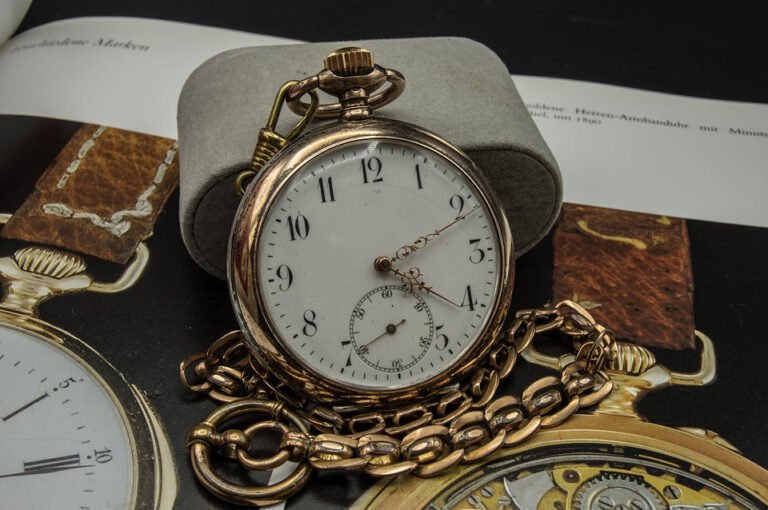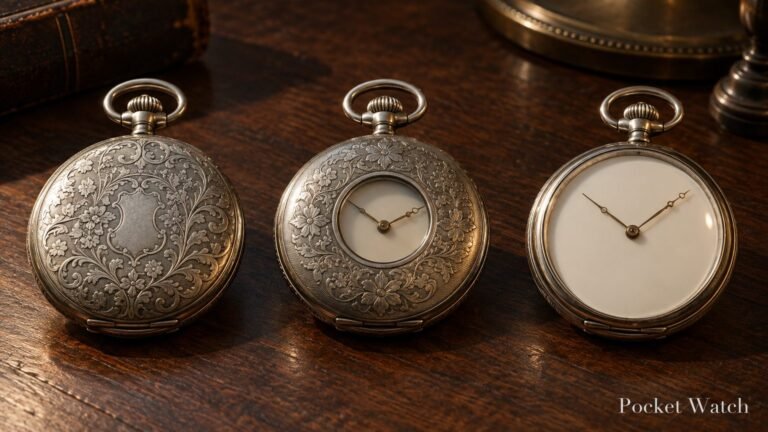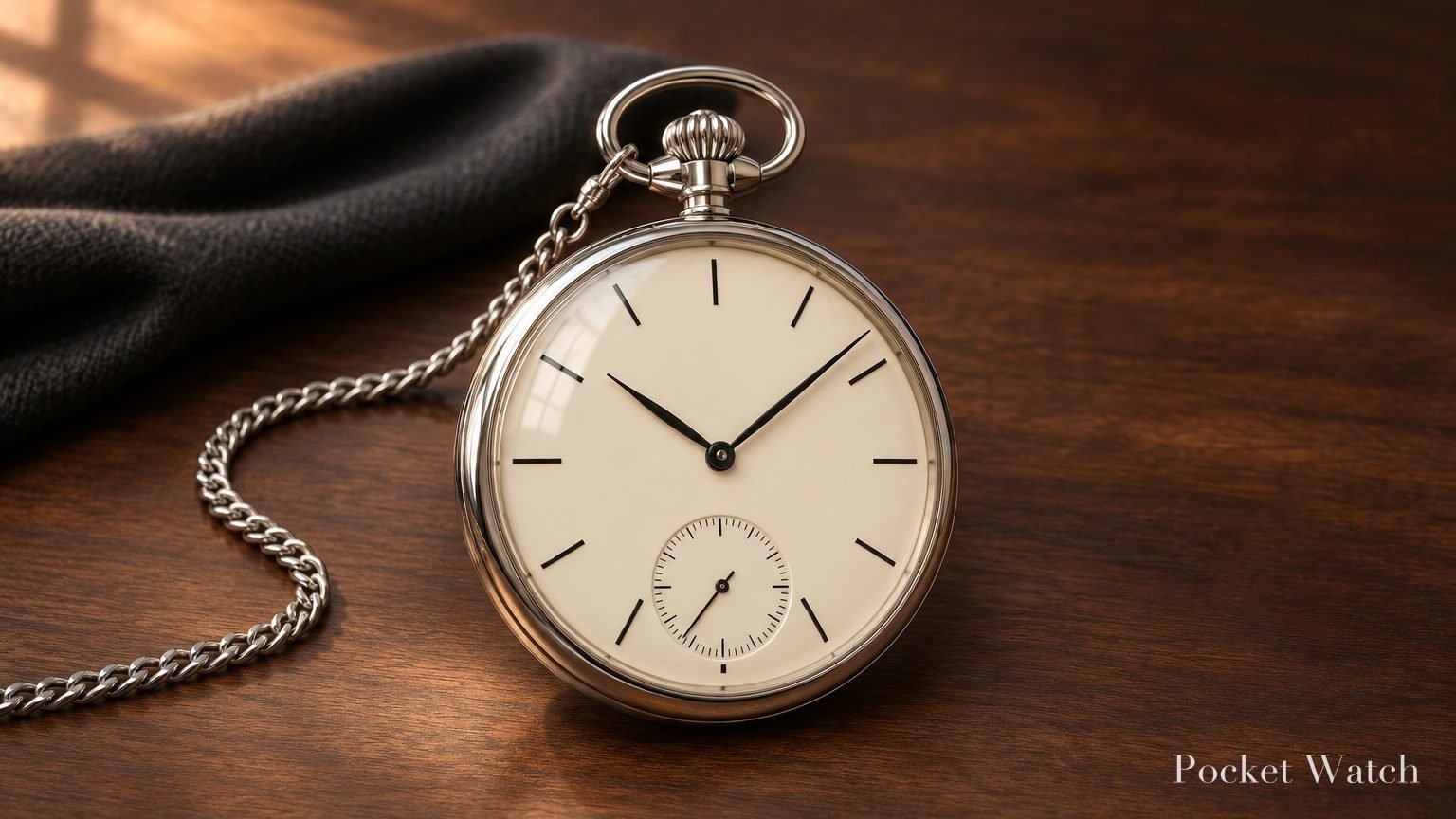
A mechanical pocket watch runs on a coiled spring instead of a battery. You wind it by turning the crown, the spring slowly unwinds, and a train of gears turns that stored energy into steady ticks. Wind it once a day, at the same time, and it will keep running for years with simple care.
That is the whole idea. The rest of this guide shows you what happens inside the case, how mechanical compares with automatic and quartz, and the visible signs of a well-made watch. You will also find models from our mechanical collection along the way.
Key takeaways
- Power: a wound mainspring, not a battery. No battery to replace, ever.
- Routine: wind it once a day until you feel the crown resist, then stop.
- Versus quartz: a quartz watch is more precise and needs little more than a new battery now and then; a mechanical one is a small machine you can watch working.
- Versus automatic: an automatic winds itself with motion; in a pocket, that motion is limited, so hand winding stays the norm.
- Quality signs: a see-through back, a smooth crown, a seconds hand that ticks several times per second.
Mechanical pocket watches to start with

Silver Vintage Mechanical Pocket Watch - Silverpunk
Double skeletonized case: the gears stay in view.
View product →

Black Vintage Mechanical Pocket Watch - Johnson's Classy
Black half hunter, wound by hand once a day.
View product →
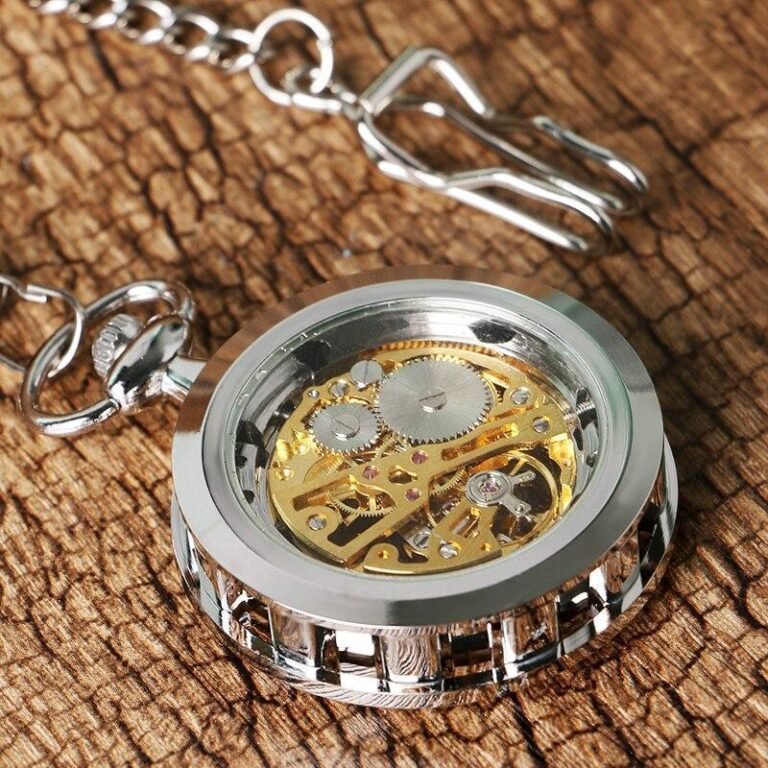
Mechanical Skeleton Open Face Pocket Watch - Series
Open face skeleton in five colors.
View product →
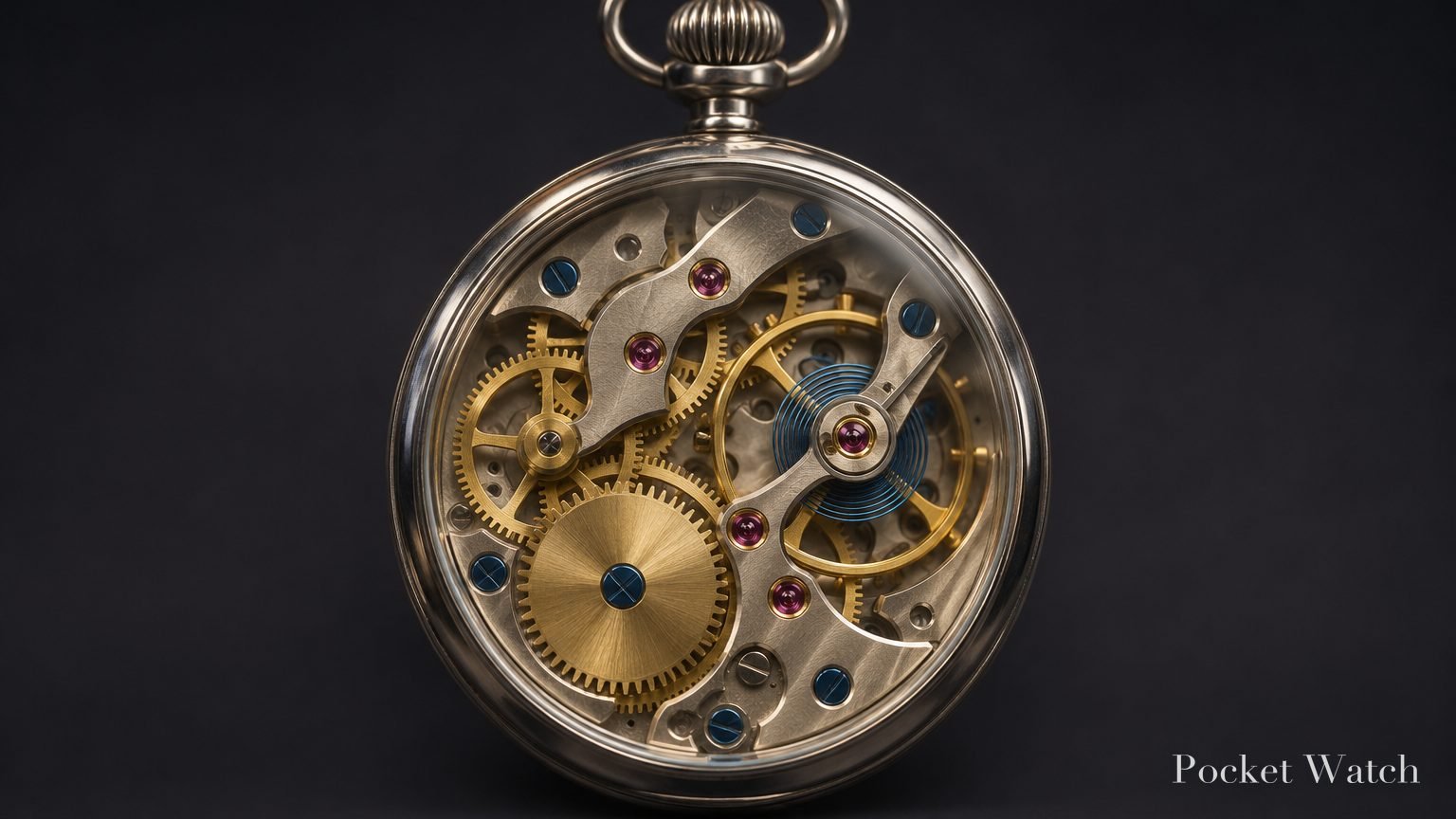
How does a mechanical pocket watch work?
Think of it as four parts in a chain. Each one passes energy or control to the next.
- The mainspring is a long steel ribbon coiled inside a drum called the barrel. Winding tightens it.
- The gear train carries the spring’s force from the barrel to the hands, step by step.
- The escapement lets that force out in tiny, equal pushes. This is the tick you hear.
- The balance wheel swings back and forth on a fine hairspring at a steady beat. It sets the pace of the whole watch.
Small synthetic rubies, called jewels, sit at the busiest pivots to reduce friction. That is why you see red dots on many movements. For the history of these parts, the mechanical watch entry on Wikipedia is a solid start.
If you want the name of every wheel and screw, our guide to pocket watch parts lists them, and how pocket watches work covers the older designs.
Mechanical vs automatic vs quartz pocket watch
The three movements look alike from the outside. The difference is where the energy comes from, and how much attention the watch asks of you.
| Point | Mechanical (hand-wound) | Automatic | Quartz |
|---|---|---|---|
| Energy source | Mainspring wound by the crown | Mainspring wound by a swinging rotor, or by the crown | Battery |
| Your daily task | Wind it once a day | Wind it by hand when it is not moved much | None |
| Seconds hand | Ticks several times per second, looks smooth | Same as mechanical | Jumps once per second |
| Accuracy | Good, varies a little day to day | Good, varies a little day to day | Highest |
| Upkeep | Cleaning and oiling by a watchmaker over the years | Same as mechanical | A new battery from time to time |
| Best for | A daily ritual and a visible movement | Wearers who like a self-winding mechanism | Grab-and-go reliability |
Inside a pocket, a watch barely moves. An automatic rotor gets little to work with, so many owners top up their automatic by hand with the crown.
Read the product page before you buy: some watches listed as automatic, like our Roman half hunter, are in fact hand-wound. Browse the automatic pocket watches and quartz pocket watches to compare.

How often should you wind a mechanical pocket watch?
Once a day, ideally at the same time. Most people pick the morning, as they put the watch on. A daily wind keeps the spring in its strongest range, where timekeeping is steadiest.
Turn the crown with your thumb and index finger in short, even turns. You will feel it get firmer. When you feel firm resistance, stop: never force the crown past that point.
Our product pages give a rough count for some models, such as about forty turns a day for the Silverpunk, about fifty for Johnson’s Classy, but the resistance is the real signal.
Setting the time, pulling the crown, the hunter-case quirks: our step-by-step guide on how to wind a pocket watch covers every case.
Good habit
- Wind the watch before you set the time, not after.
- Hold the watch in your palm while you wind it. Never wind it on your wrist or while it hangs on the chain.
- If you skip a day and it stops, simply wind it fully and set the time again. Nothing is damaged.
Hand-wound half hunters
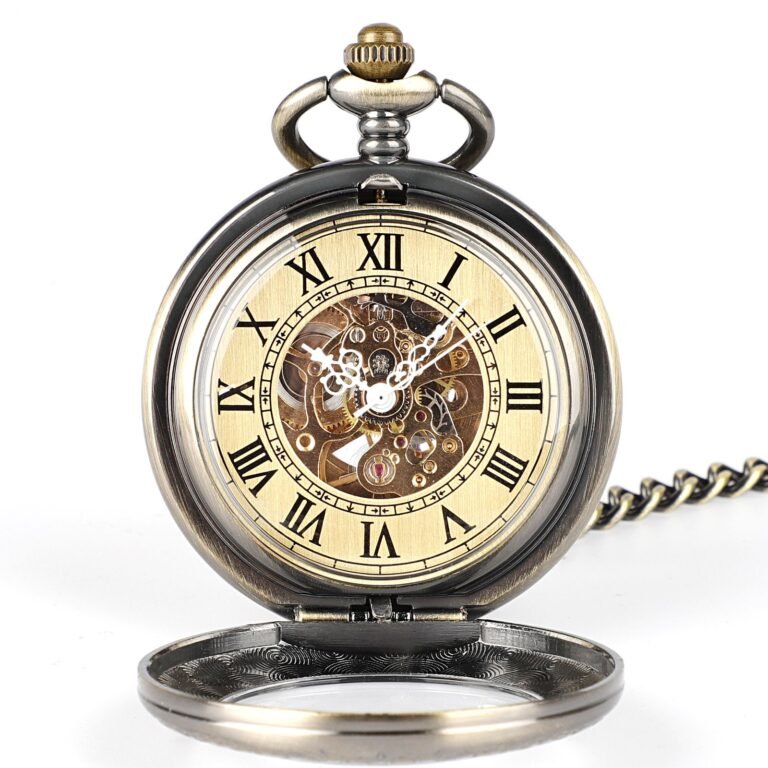
Vintage Mechanical Half Hunter Pocket Watch - Roman
Hand-wind movement and a skeleton seen through the flap.
View product →

Black Mechanical Half Hunter - Blue Peephole
Black dial with blue numerals and hands.
View product →
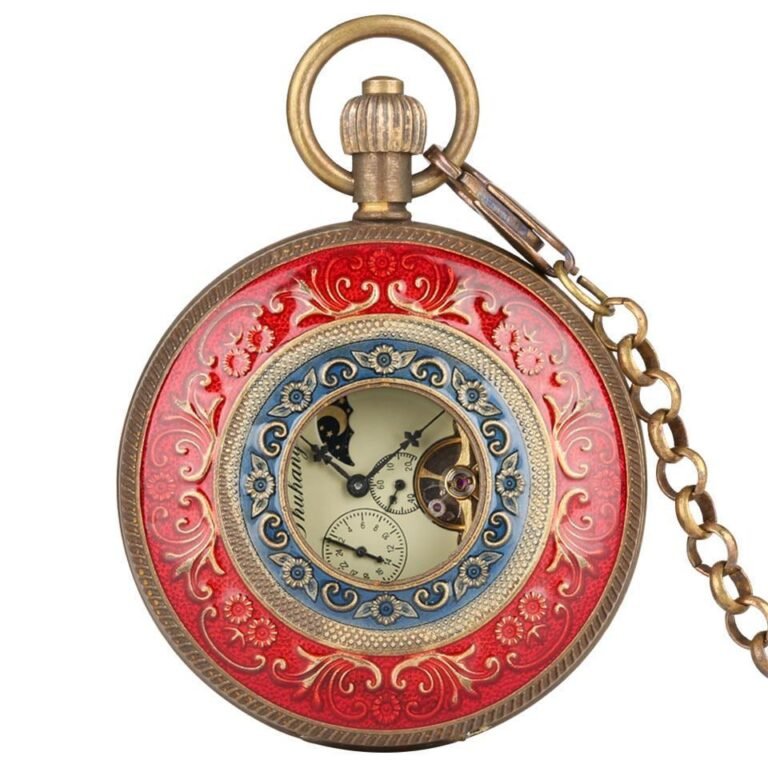
Vintage Mechanical Half Hunter Pocket Watch - Black Eagle
Roman and Arabic numerals on a vintage dial.
View product →
Can you overwind a pocket watch?
Not by winding it normally. Modern movements are built so the crown simply stops turning once the spring is full. What breaks a mainspring is forcing the crown past that stop.
So the rule is easy: wind until you feel resistance, then let go. If a watch is fully wound but still stops, it is not overwound. It usually needs cleaning or a watchmaker’s check.
Old movements are more delicate. On an antique watch, wind gently and stop a little before the firm stop. If the crown feels gritty or slips, stop winding and have it checked rather than pushing on.

How to spot a well-made mechanical watch
You do not need a loupe. These signs are visible in a product photo or in your hand.
- A see-through back. A glass caseback, or a second cover that opens on the movement, shows a real mechanism rather than a sealed module.
- A skeleton dial. An openwork dial lets you see the balance wheel swing. It is a clear sign of a mechanical movement.
- A sweeping seconds hand. Several small ticks per second. A single jump each second means quartz.
- A smooth crown. Winding should feel even, with a soft clicking and a clear stop.
- A steady case. The covers close cleanly, with no rattle at the hinge.
A sealed back is not a bad sign in itself. Many well-made watches hide the movement. A visible one simply lets you check what you are buying, and it turns the watch into something you will enjoy looking at.
Our skeleton pocket watches make the first two signs part of the design. On full and half hunters, the movement often stays visible through the dial or the back.
See the movement at work

Gold Mechanical Skeleton Pocket Watch - Belphegor
All gold, with the skeleton visible on all sides.
View product →

Steampunk Mechanical Full Hunter Pocket Watch - Black Star
Black full hunter with a transparent case center.
View product →

Vintage Steampunk Mechanical Half Hunter Pocket Watch - Golden Spot
Engraved lid with a window; mechanism visible from the back.
View product →
Which hand-wound pocket watch should you choose?
Pick the case first, then the look. The movement inside works the same way in every style. If you hesitate between covers, our comparison of full hunter, half hunter and open face watches settles it.
- You check the time often: an open face or a half hunter.
- You want the dial protected: a full hunter.
- You love gears: a skeleton dial or a double hunter with a back cover over the movement.
- You like a darker, industrial style: our steampunk pocket watches.
Three different looks
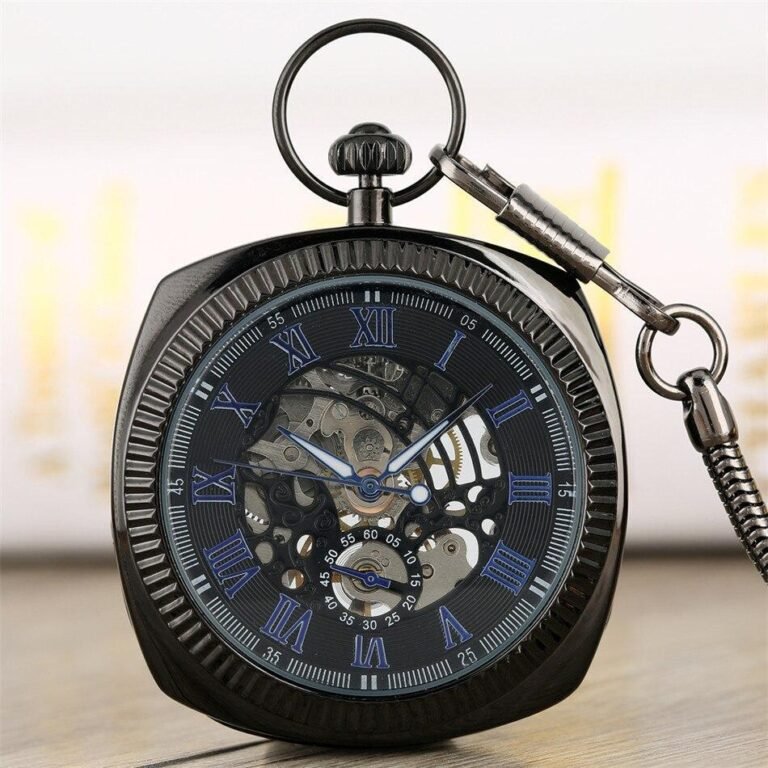
Square Mechanical Pocket Watch - B Squared
A square open face, in four colors.
View product →
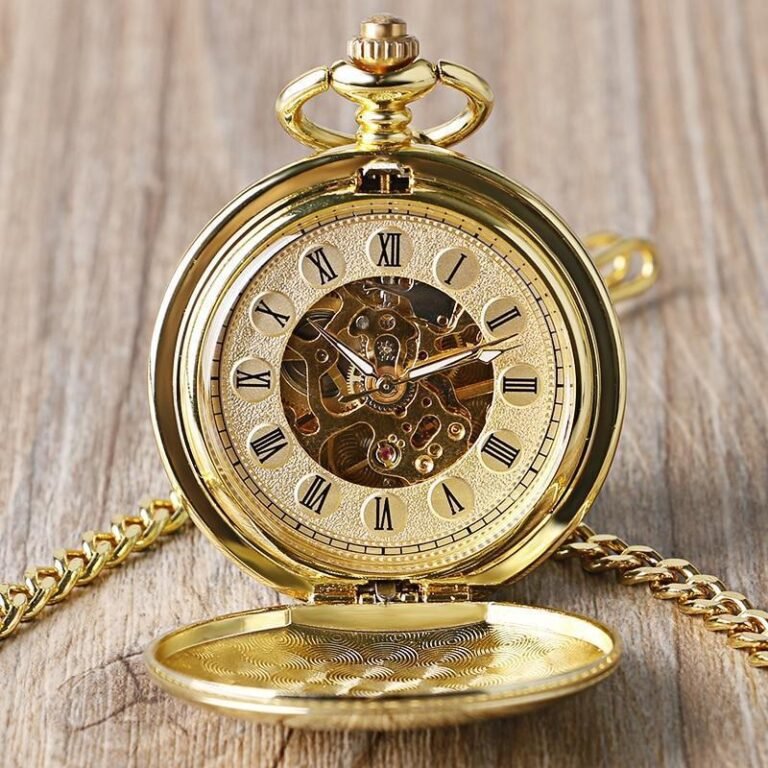
Gold Mechanical Double Hunter Pocket Watch - Golden Butterfly
Gold-tone double hunter for evening wear.
View product →

Steampunk Mechanical Half Hunter Pocket Watch - Black Wheel
Gothic half hunter with a visible skeleton.
View product →
How to care for a hand-wound pocket watch
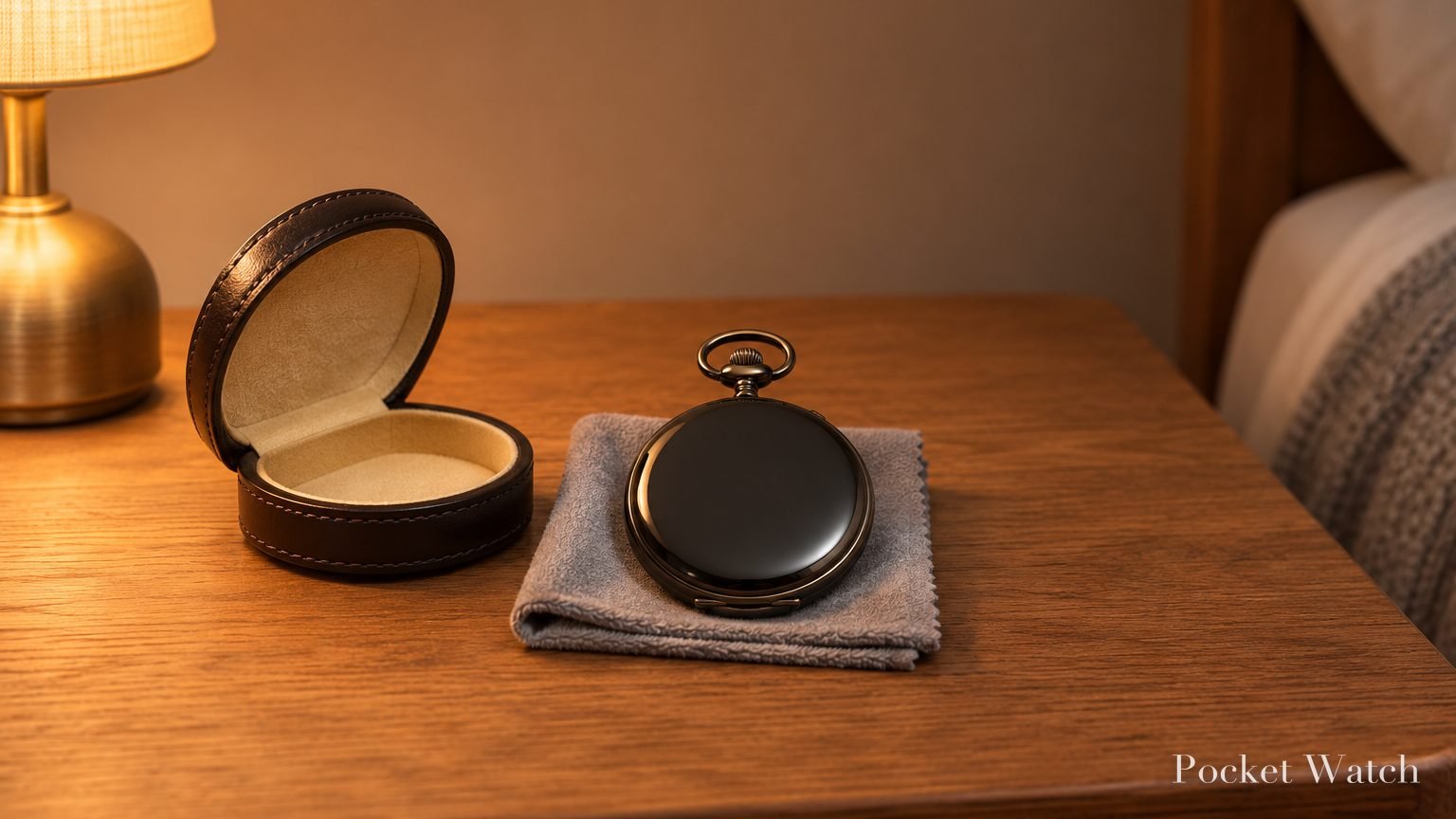
Daily care takes seconds. Wind it, wear it, and put it away in the same safe spot each night, ideally in its case or on a soft cloth.
Wipe the case with a dry microfiber cloth after wear. Keep the watch away from water unless its product page says otherwise. Have a watchmaker clean and oil the movement every few years, or sooner if it starts losing time.
To avoid
- Forcing the crown once it stops turning.
- Leaving the watch next to strong magnets, such as speakers or magnetic phone cases: they can disturb the hairspring.
- Dropping it in a pocket with keys or coins, especially an open face model.
- Opening the back yourself to oil it. Leave that to a watchmaker.
A good chain also protects the watch: it keeps it from slipping out of the pocket. Browse our pocket watch accessories.
Frequently asked questions
How does a mechanical pocket watch work?
Winding the crown tightens a mainspring. The spring releases its energy through a gear train, and an escapement with a balance wheel lets it out in small, even steps that move the hands.
How long does a mechanical pocket watch run?
It depends on the movement, but a full wind is meant to last more than a day. That is why a daily wind at the same time is the standard routine.
Do mechanical pocket watches need batteries?
No. It has no battery at all. Its only energy is the spring you wind by hand.
How often should you wind a mechanical pocket watch?
Once a day, until the crown stops turning. Winding at the same time each day keeps the timekeeping steady.
What is the difference between a mechanical and an automatic pocket watch?
Both run on a mainspring. A mechanical watch is wound by hand with the crown. An automatic also has a rotor that winds the spring with motion, but a pocket gives it little movement, so hand winding is still common.
Can you overwind a pocket watch?
Not by normal winding: the crown stops when the spring is full. Damage comes from forcing it past that point.
Is a mechanical watch more accurate than quartz?
No. Quartz is more accurate. People choose mechanical for the craftsmanship, the ritual of winding and the movement they can see.
In short
This kind of watch asks for one minute a day and gives you a machine you can watch at work. Choose the case you like, wind it each morning, and keep it away from water and magnets. Start with our mechanical pocket watches.