The political and religious influence that prevailed in Europe from the fifteenth to the nineteenth century is no stranger to the heyday of the watch industry.
Watchmaking began in Switzerland, thanks to JEAN CALVIN, who, with his rules of austerity, which forbade any display of ostentation and wealth, especially in the wearing of jewelry, forced goldsmiths to survive by becoming humble and austere watchmakers.
The watchmaking industry incipiently Swiss, took advantage of the expulsion of the Huguenots from France in 1685 to offer them asylum in Geneva. Among those welcomed were a large number of outstanding French watchmakers who moved their workshops to Switzerland, bringing with them great capital and experience, and soon made Geneva the world capital of watchmaking.
Meanwhile, in England, around 1640, appeared the "Puritan Watch", a Pocket watch with a sober case and without any decoration, manufactured according to the principles of austerity and sobriety, typical of the dominant sect of "Puritans". Principles that reflect the severity of the rules imposed by OLIVER CROMWELL (1549-1660).
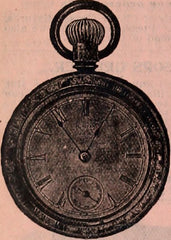
It is said that because of this persecution and in order to hide the watches, the first pockets appeared on the clothes. This would perhaps be the explanation for the appearance of the Pocket watch.
In France, Louis XIV prohibited the use of gold and precious stones during the war. This limitation, attributed to the need to contain the unbridled luxury of the Court, influenced, among other things, the goldsmiths and watchmakers, who were forced to make the cases of Pocket watches out of metal, as they lacked precious metals to work with.
With the "Edict of Nantes," which guaranteed Huguenots the same rights as Catholics, the waters began to flow again, and many of the watchmaking families who had once emigrated to Switzerland and Germany returned to France, quickly changing the future of the industry.